





| Myrcathis
Sanctovar Grimhaven Grainmere |
Grainmere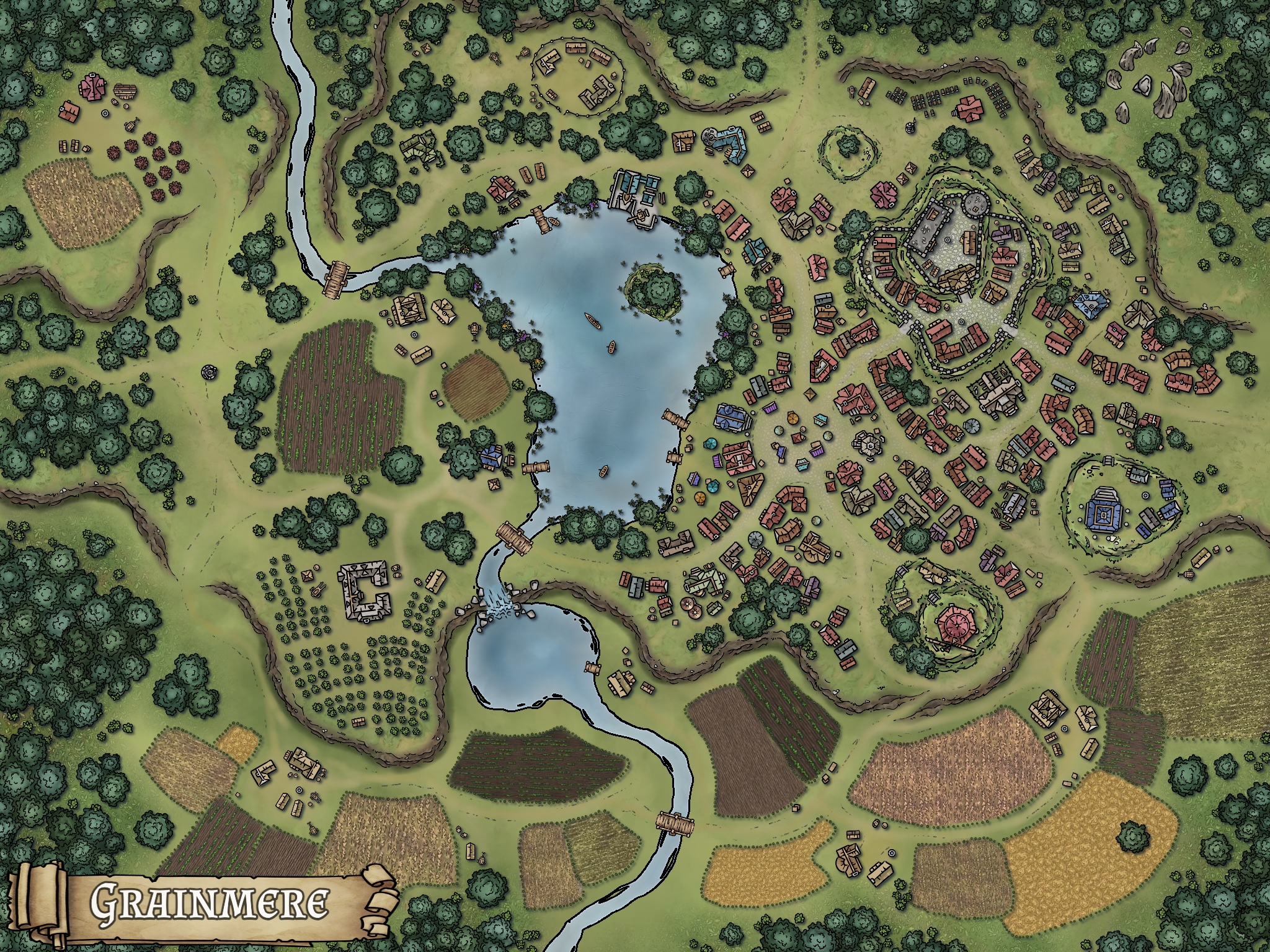
|
General Information Grainmere is the breadbasket of Myrcathis, and it never lets anyone forget it. Where Grimhaven hides beneath its trees, Grainmere lies wide open: endless golden fields rolling out to every horizon, broken only by hedgerows, cart tracks and the slow turning sails of the great windmill. There is no forest to hide in here, and no shadow deep enough to stand in unseen. Above the town stands the Harvest Keep, a squat fortress of pale stone where the Warden keeps the tallies. Every bushel that leaves the fields is counted at the House of Scales before it goes north to Sanctovar, and what remains is what the town lives on. The Keep is not a place of war — it is a place of ledgers — but it looks down on every street in Grainmere all the same. The town itself is far busier than its size suggests. Market days fill the square with carters, grain factors, pilgrims and travellers moving between the capital and the southern villages, and the streets stay crowded from first light until the evening bell. For anyone who would rather not be recognised, Grainmere is both the best and the worst place to be: a crowd to vanish into, and a hundred pairs of eyes with nothing better to do than look. Life in Grainmere The people of Grainmere are farmers, millers, and herders — pragmatic, faithful, and exhausted. Their devotion is genuine, but practical. They pray not for glory or purity, but for rain, soil, and mercy. Each morning begins with the Harvest Hymn, sung at the edge of the fields before the first plow breaks the ground. Each evening ends with the Benediction of the Flame, when farmers kneel facing south, thanking the King for allowing them to work another day. The Tithe Square At the village’s northern edge, close to the lake, lies the open market square where merchants, Inquisitors, and tax wagons gather multiple times per week. When the tithe is complete, the square becomes a celebration ground — filled with laughter, bread, and music that fades the moment the red cloaks of the Inquisition appear. The Grainmere Brewery Built of heavy timber and stone, it is one of the oldest structures in Grainmere — a sturdy, smoke-stained building where the scent of malt, yeast, and warm grain hangs permanently in the air. Run by Jorah Beldrin, a dedicated but weary master brewer, the brewery produces the ale that sustains both the village and much of Sanctovar’s common folk. Great copper vats bubble from dawn until dusk, and rows of wooden barrels line the cool, shadowed cellar beneath. Each batch is blessed with a short prayer to the Flame before it is sealed for transport, a tradition followed more out of fear than faith. The Ploughman’s Rest This inn is dim and smoky, low-beamed and never quite quiet, and it is the one room in Grainmere where people still say what they think. Here the talk turns to the taxes, the droughts and the Warden’s men, carried along by laughter and old songs that nobody has written down. Behind the bar stands Old Darrin Tolv, a thick-shouldered ex-miller with a crooked grin, “to a sermon that went on too long.” What he pours is the Amber Harvest Ale, weak but cheap, served in clay mugs etched with sunburst motifs. There is one rule, and no one had to write that down either: when the bell from the chapel rings after dusk, every voice in the room stops for one silent minute. Ask the regulars why and they will tell you it is only habit. Watch their faces and you will wonder. (More details and information will be revealed when they have been discovered by the characters.) |